Inventory Management Across Multiple Locations

Table of contents
Talk to a fulfillment consultant today
It doesn't matter if your operation is going global or you just need the extra storage space, at some point you’re going to run into issues with multi-location inventory management. But growth is a good thing and success brings challenges in itself.
This article has everything you need to rise to the challenge and master inventory management across multiple locations.
What is Multi-Channel Inventory Management
Multi-channel and multi-location inventory management are similar terms used to describe the process of holding and controlling steady stock levels across multiple warehouse locations and when selling on various platforms, such as Amazon, Etsy, and eBay.
Advantages of Multi-Warehouse Operation
Many e-commerce brands begin their operation with a single warehouse location, wherein they fulfill, pick & pack and ship sales order, which works for a while. But one warehouse can seldom scale with the needs of a growing e-commerce business.
When an e-commerce brand targets a national audience, transporting items from a single warehouse may cause shipping delays for your customers, especially when those customers are located in a different state. That’s where multiple warehouses come in to play.
Lower Logistics and Fulfillment Costs
If your only warehouse is in Chicago, but you have a growing audience of customers in New York, the shipping costs to move inventory 800 miles to the East Coast is going to add up very quickly. Thus, an additional warehouse in New York would cut down on your shipping costs, even after you factor in the cost of a second warehouse.
Consolidate Inventory for Quick Shipping
E-commerce brands can also utilize multiple warehouses to consolidate certain products near specific customers. For example, a retailer with a primary warehouse in Atlanta and a large contingent of customers in Boston could consolidate 50% of its top-selling product in Massachusetts to facilitate quicker shipping for that group.
In each case, utilizing a second warehouse closes the distance that your product must cover to reach the customer, thereby reducing shipping costs to a more manageable level and minimizing the time it takes to deliver. Though, few brands can afford to build, buy, or rent a warehouse in every state that they have customers.
Multichannel Inventory Problems: The True Cost of Holding Additional Inventory
Therein lies the problem. If you plan to sell on multiple channels or from multiple locations, you need a system of multi-location inventory management. Unfortunately, research shows that multi-location inventory management is also one of the most challenging, most expensive endeavors an eRetailer can undertake.
According to statistics published by Business Wire, e-commerce brands annually lose more than 11% of sales to what’s known as the Ghost Economy, a largely invisible cost associated with out-of-stock, overstock and the variety of return order issues that cost businesses more than $1.7 trillion every year.
Tips for Managing Inventory Across Multiple Locations
Soft costs (like those mentioned above) not only increase your inventory carrying costs, they negatively impact your inventory turnover ratio and severely reduce your profit margins.
Though it’s easy for some of the larger brands to write off these costs as just the price of doing business, the smaller brands can’t afford that luxury. There are things you can do to minimize overstocks, stocks and preventable returns.
- Real-Time Visibility and Synchronization
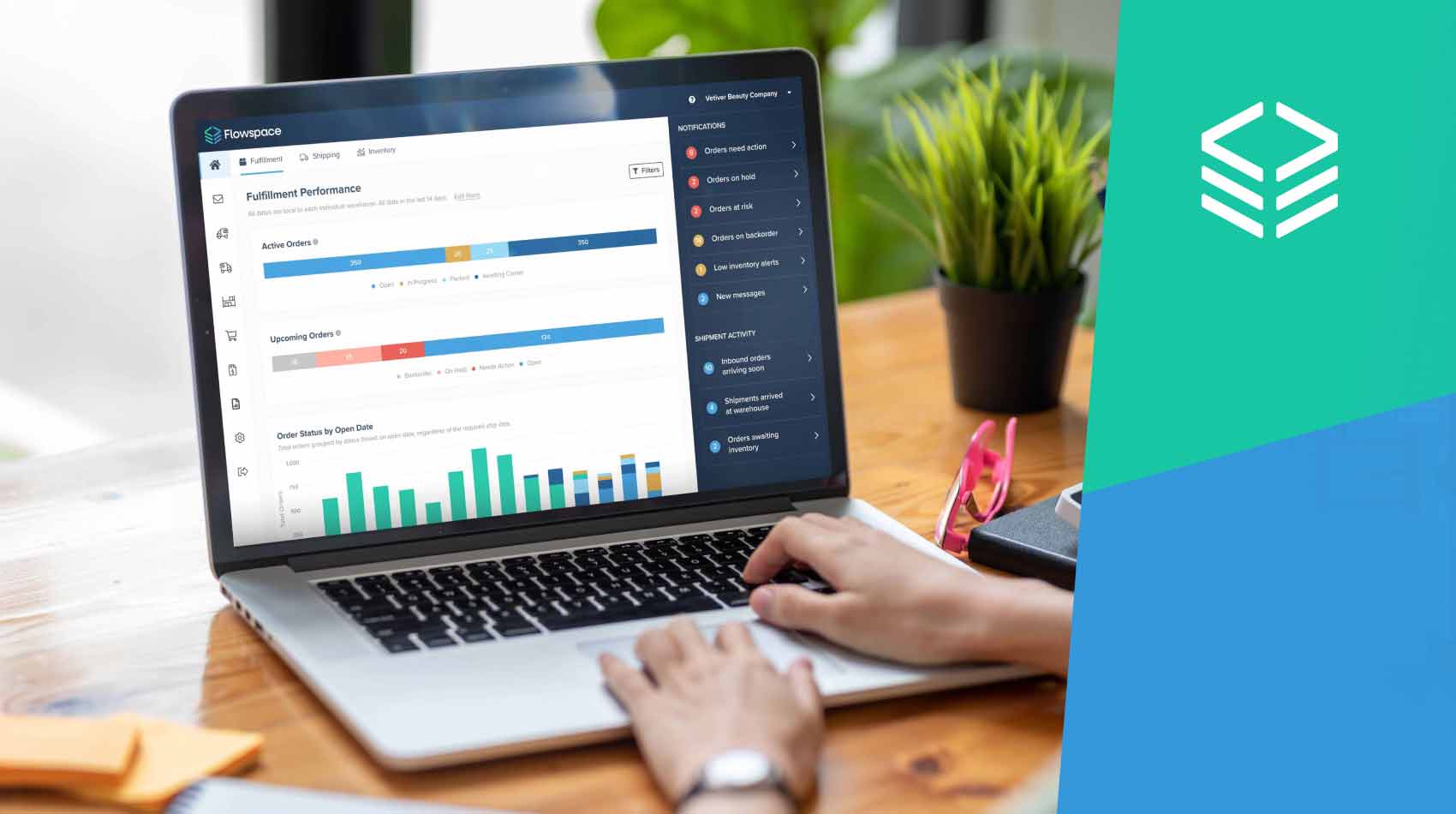
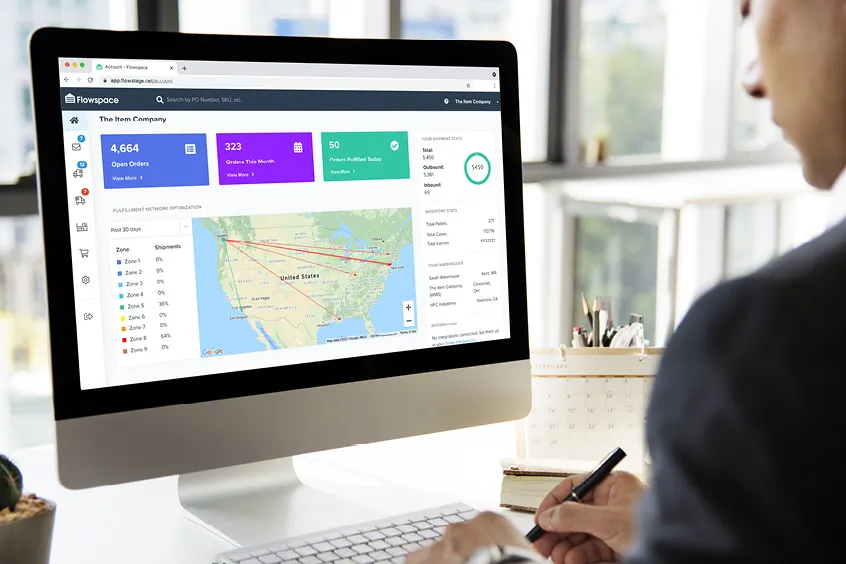
The best way to manage inventory (and the associated costs) across multiple locations is to invest in inventory management software that improves real-time visibility, synchronization, and accurate inventory tracking. These solutions enable retailers to improve sales, improve order accuracy, and reduce the overall time spent managing inventory.
- Carefully Select Warehouse Locations
It goes without saying that you need to be careful when choosing where to locate your warehouse. Remember, you’re looking for the sweet spot between proximity to your customers and cost. Rule of thumb is the closer you locate your warehouse to a major city (Chicago, New York, etc) the higher the cost of space, rent and labor.
- Optimize Demand Forecasting
The faster your turn inventory, the faster you free up working capital and valuable warehouse space. Therefore, it's essential that you have the right balance of inventory and know where to allocate it.
Fortunately, when you improve inventory visibility, it’s easy to improve demand forecasting; better track their inventory turnover ratio; inform product pricing adjustments and assess the health of the business.
- Set Safety Stock and Reorder Points
To manage inventory across multiple warehouse locations, you must know when to purchase more materials, which can be a challenge when the product is spread out across the country.
Therefore, you must pay close attention to your stock levels to ensure you don’t run out and cause delayed deliveries. The goal is to determine the right amount of safety stock for each of your items, as well as reorder points to make sure you don’t have to dip into your safety net more than is absolutely necessary.
- Utilize On-Demand Warehousing
If all of this sounds really expensive and complicated, it’s because it is. Fortunately, there is a service designed for retailers who don’t want or can’t afford to operate a warehouse everywhere they have customers.
OnDemand warehousing connects brands in need of storage and distribution to the warehouses and fulfillment centers that have excess capacity, similar to how Airbnb provides accommodation for travelers by matching them with homes that were not being used. In this way you can eliminate the costs of operating a warehouse yey still benefit from owning a warehouse near your customers, no matter where they live.
Upgrade Your Inventory Management Capabilities With Flowspace
Just the thought of opening another location can leave a retailer shaking in their boots. Fortunately, on-demand warehousing and fulfillment services like Flowspace not only reduce the soft costs of holding and managing inventory across multiple locations, they make it easy to realize the same profit you would by owning your multiple warehouses with a lower outbound cost.
Flowspace fills a desperate need for e-commerce businesses, but more importantly, enables businesses to readily respond to demand without exerting the extra cost, time and effort of securing another warehouse for their inventory that was never intended to suit their specific needs. Contact us today to get started.
Last Updated
category
Related articles



























Start simplifying fulfillment with Flowspace today
Discover how Flowspace can simplify fulfillment and help your brand scale faster, with no long-term contracts or hidden commitments.
