How to Choose the Best Fulfillment Provider for a Scaling Ecommerce Business

Table of contents
Talk to a fulfillment consultant today
Choosing the right fulfillment provider is one of the most important decisions an ecommerce brand can make. The provider you choose directly affects delivery speed, margins, customer experience, and how efficiently you can grow.As ecommerce becomes more complex—with higher delivery expectations, rising costs, and real-time visibility requirements—what worked at early stages often breaks as you scale. Outsourced ecommerce fulfillment must deliver more than execution. It needs to provide flexibility, coordination, and control as operations grow.This article outlines what matters most in a fulfillment provider, how modern options differ, and where Flowspace fits for fast-growing brands.
Why the fulfillment provider you choose matters more than ever
Fulfillment is no longer a back-office function. It now sits at the center of inventory management, cost control, and customer experience.As brands expand into new channels and regions, fulfillment decisions directly influence delivery performance, working capital efficiency, and service-level consistency. Small inefficiencies that were manageable at lower volumes can quickly compound as order volume, SKU count, and channel complexity increase.That’s why modern ecommerce brands increasingly view fulfillment as a strategic requirement—not just a logistics task. The right fulfillment provider enables visibility, adaptability, and better decision-making as complexity grows.
What makes a good fulfillment provider?
Understanding what makes a good fulfillment provider starts with recognizing how expectations have changed. Today’s solutions must operate as partners in growth, not just storage operators.At a minimum, a strong fulfillment provider should offer:
- Reliable pick, pack, and ship services
- Fast, accurate order processing
- Real-time insight into inventory and fulfillment status
- Scalable infrastructure that adapts to demand
- Technology-driven workflows instead of manual processes
These fundamentals form the baseline. For growing brands, fulfillment providers ideally go further by delivering visibility and coordination across increasingly complex operaions.
For a step-by-step evaluation framework, see our full guide to choosing a fulfillment service.
Ecommerce fulfillment services built for fast-growing brands
Ecommerce fulfillment for fast-growing brands looks very different from fulfillment designed for static, predictable operations. Growth introduces variability—new channels, new regions, and different order types—that rigid systems struggle to support.Many providers also rely on standardized workflows that don’t adapt well as brands scale. Over time, this can lead to fragmented inventory, slower decisions, higher costs, and limited visibility.Modern ecommerce fulfillment services must do more than execute orders. They need to coordinate inventory, routing, and capacity across channels in real time, while remaining flexible enough to scale with demand and industry needs.The right services should support:
- Direct-to-consumer shipping through an omnichannel or dedicated DTC fulfillment provider
- Marketplace and retail fulfillment for Amazon, Walmart, and wholesale partners
- Flexible capacity for seasonal peaks, promotions, and rapid growth
- Unified inventory visibility across all sales channels
Omnichannel fulfillment across DTC, marketplace, and retail
As brands expand beyond a single sales channel into omnichannel, fulfillment complexity increases. Supporting DTC, wholesale, marketplace, and retail orders through disconnected systems often results in poor inventory visibility, inconsistent service levels, and higher operating costs.
Why omnichannel fulfillment reduces complexity
However, with the right inventory distribution network, omnichannel fulfillment enables brands to:
- Maintain unified inventory visibility across all channels
- Prevent stockouts and overstocking
- Allocate inventory based on demand, location, and service requirements
A strong DTC fulfillment provider allows brands to serve every channel from a centralized system, rather than managing separate workflows for each channel.
Flowspace vs Traditional 3PLs
As ecommerce operations grow, the differences between modern fulfillment providers like Flowspace and traditional 3PLs also become clearer.Traditional 3PL services are typically optimized for predictable volumes and operations. They rely on fixed fulfillment center locations, manual processes, and limited real-time visibility. This model can work for stable, single-channel businesses, but it often struggles as brands expand across channels, regions, and order types.Modern providers take a different approach. Flowspace, for example, combines best-in-class software with flexible warehouse coverage and operations that help teams make smarter decisions as conditions change.[ninja_table_builder id='7524']
A nationwide fulfillment network powered by intelligent distribution
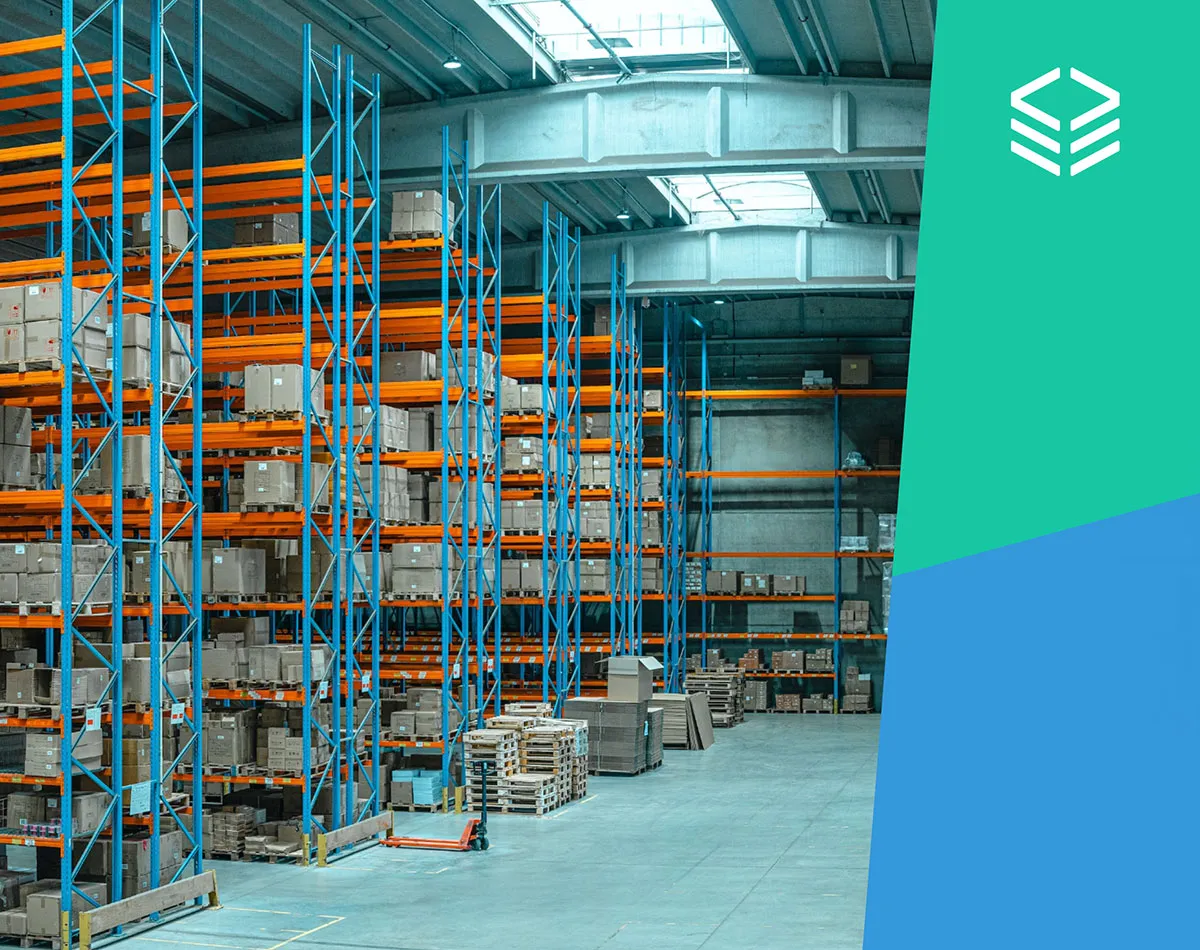
Your provider’s physical footprint additionally plays a major role in fulfillment performance. A nationwide fulfillment network allows brands to place inventory closer to customers, reducing shipping costs and delivery times while improving reliability.For instance, Flowspace’s inventory distribution supports:
- Faster ground delivery
- Lower shipping costs
- Easier expansion into new regions
A flexible warehouse coverage also makes it easier to rebalance inventory as demand shifts—without disrupting operations or customer experience.
Automated order routing and real-time visibility
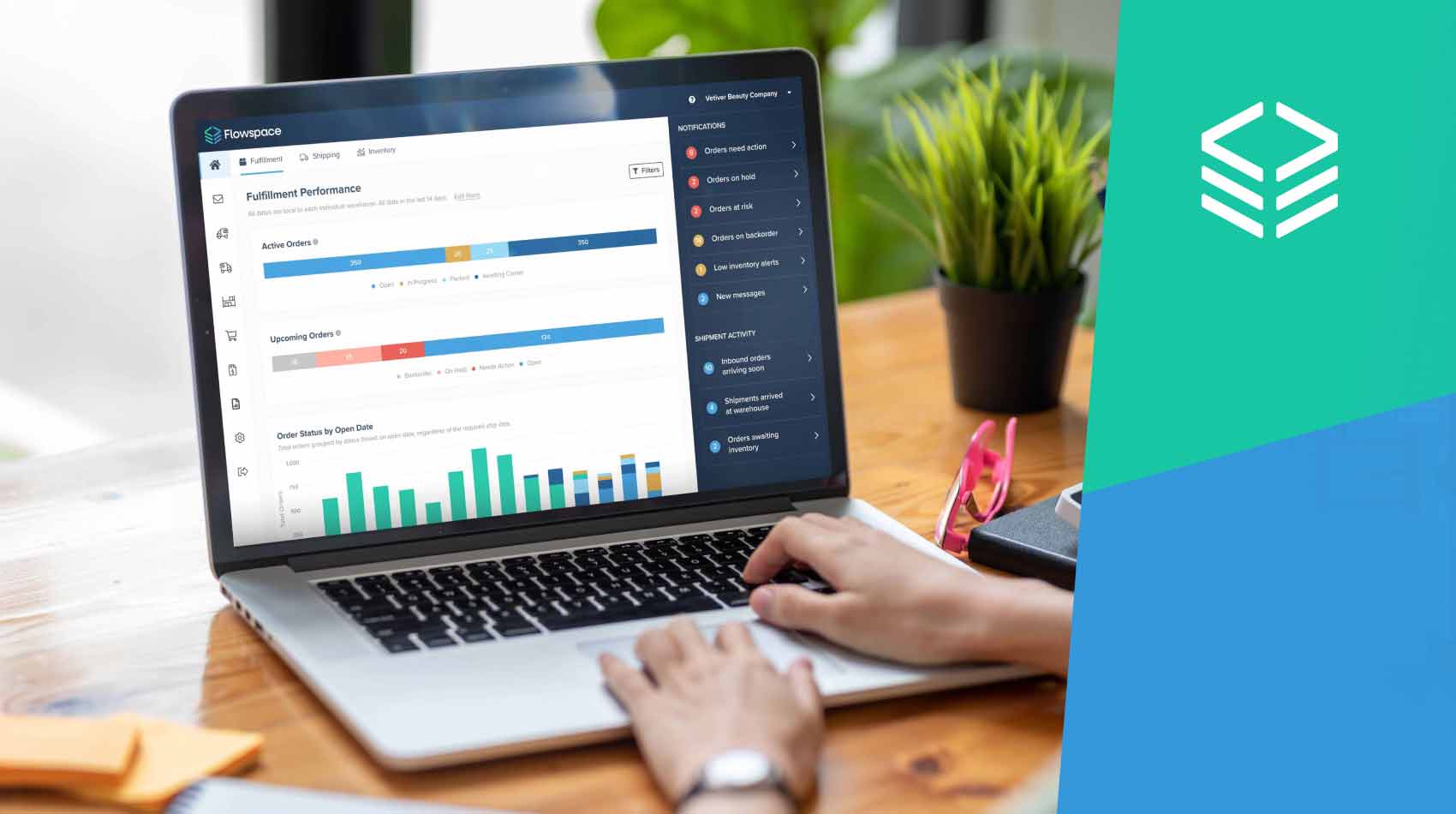
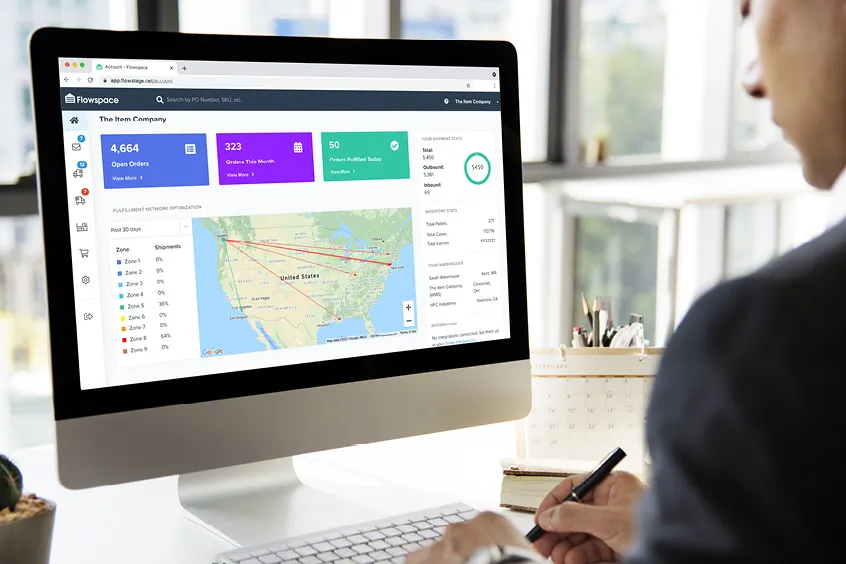
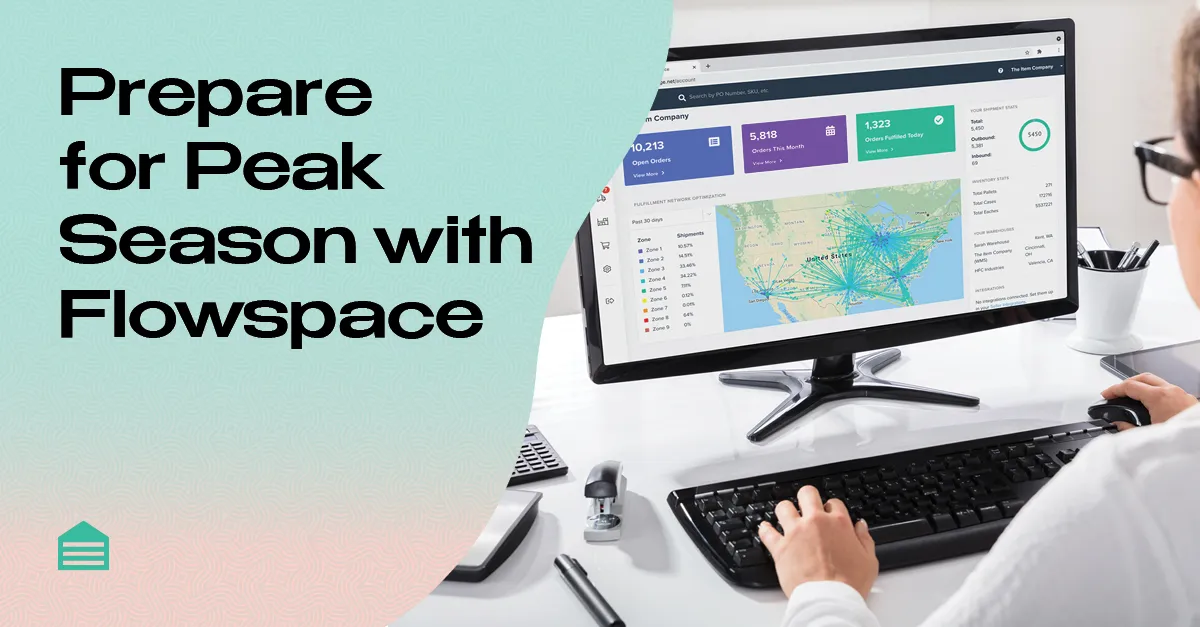
Modern fulfillment depends on intelligence as much as infrastructure. Brands increasingly expect a fulfillment provider with real-time visibility into inventory and order flow.Through automated order routing, modern partners assign each order to the best fulfillment location based on inventory availability, proximity, carrier performance, and service requirements.Real-time visibility also means faster insights. With AI-supported tools, for instance, teams can:
- Answer inventory and order questions quickly
- Catch and resolve fulfillment issues earlier
- Spend less time on manual, repetitive tasks
Where Flowspace fulfillment fits for scaling brands
When evaluating the best fulfillment provider, scaling brands should look beyond warehouse count and focus on adaptability, visibility, and ease of management.Flowspace is built for businesses growing beyond a single warehouse, channel, or region. Its nationwide coverage and centralized platform make it easier to manage inventory, route orders, and adjust capacity as demand changes.Instead of locking brands into fixed locations or rigid processes, Flowspace helps teams make smarter fulfillment decisions in real time—so they can expand without creating new bottlenecks or adding headcounts.A software-first fulfillment solution is a great brand for teams that:
- Need a flexible DTC fulfillment provider alongside marketplace and retail fulfillment
- Rely on outsourced ecommerce fulfillment but want real-time control
- Expect rapid growth or seasonal volatility
- Require fast, data-driven decision
To evaluate the right fit for you, get a quote today.
FAQs about choosing a fulfillment provider
How do I choose a fulfillment provider?
Start with fit for your business model and growth plans. The right partner should support your product type, order volume, and expected growth.From there, prioritize providers that offer:
- Technology and real-time visibility
- Network flexibility and geographic coverage
- Support for DTC, wholesale, and marketplace fulfillment
What’s the difference between Flowspace and a traditional 3PL?
The difference comes down to flexibility and visibility. Flowspace combines modern technology with hands-on fulfillment operations, while traditional 3PLs rely on static systems and fixed infrastructure that can be harder to scale.
What is the best fulfillment solution for scaling brands?
The best fulfillment solution is designed for growth. It supports multiple sales channels, uses a distributed warehouse network, and provides real-time visibility so teams can make better decisions as complexity increases.
Last Updated
category
Related articles














Start simplifying fulfillment with Flowspace today
Discover how Flowspace can simplify fulfillment and help your brand scale faster, with no long-term contracts or hidden commitments.
