Fulfillment Operations Platform: What It Is and How It Helps You Scale
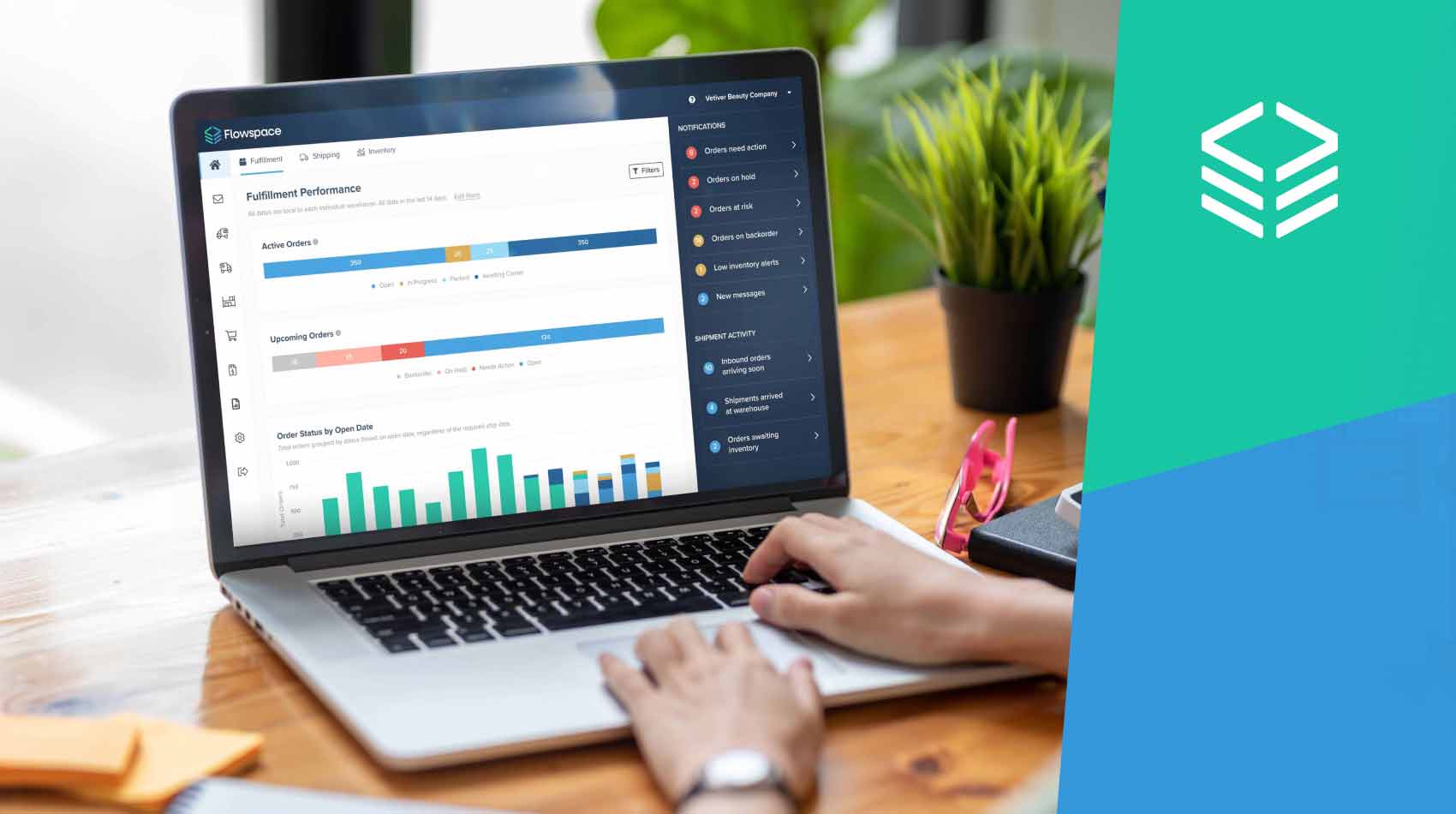

Table of contents
Talk to a fulfillment consultant today
Your ecommerce brand is scaling fast. You’re expanding into new channels, and seeing order volume and operational complexity seemingly triple overnight.But poor customer service, an unintelligent dashboard, and a limited fulfillment network start to hinder your ability to scale effectively.It’s a familiar tale for DTC and ecommerce brands: You’ve outgrown your 3PL.The next stage is the fulfillment operations platform. More than “just” software, a fulfillment operations platform is a portal of control into an interconnected infrastructure.In this article, we’ll break down what this platform exactly is, why traditional systems no longer serve modern brands, and available solutions that bring everyday and large-scale wins. Whether you’re experiencing growing pains or planning your next scale-up, consider this your guide to the next evolution of fulfillment.
What Is a Fulfillment Operations Platform?
A fulfillment operations platform is the core infrastructure that replaces piecemeal 3PL relationships, spreadsheets, and guesswork. It brings every moving part—inventory placement, warehouse ops, carrier selection, real-time tracking, and cost analytics—into one unified software and human-driven process, built for fast-growing brands navigating fragmented operations and rising costs.To meet said brands’ needs, flexibility is at the core of the fulfillment operations platform.For example, a suite of tools, such as our Network Optimization System (NOS), helps you improve delivery speed, reduce costs, and stay ahead of customer expectations. You save time—up to 5 to 10 hours per week, according to our customers—and can reinvest elsewhere by untying capital from fixed costs to a pay-for-what-you-use model.A fulfillment operations platform quickly becomes the backbone of your fulfillment network. Combining powerful technology, a flexible footprint, and deep operational expertise, you don’t just get best-in-class software—you also get a dedicated account manager who knows your business, a reward-winning support team that resolves issues fast, and a product team that listens and ships improvements based on your feedback. It’s built to help you adapt to shifting conditions—like global tariffs or seasonal spikes—and run day-to-day operations with precision and confidence.
Why Traditional 3PLs No Longer Cut It
Ecommerce isn’t what it was five years ago. We’re seeing how:
- Costs are rising across the board: From warehousing and transportation to labor and packaging, fulfillment costs continue to climb. Last-mile delivery alone represents 53% of total shipping costs, while instability in supply chains places pressure on margins, making efficiency a competitive advantage.
- Selling is increasingly complex and multichannel: Customers expect a consistent, seamless experience no matter where they’re buying (and they don’t care what happens behind the scenes to make that possible).
- Operations are distributed: Inventory now spans across warehouses, stores, and marketplaces, requiring real-time coordination and visibility to avoid stockouts and delays.
Legacy 3PLs are struggling to keep up with these realities for many reasons, ranging from disconnected tech to an inability to digitize. [ninja_table_builder id='7524']
Rigid Infrastructure and Limited Flexibility
Traditional 3PLs have a narrow warehouse network and typically require long-term contracts based on fixed storage or order volumes. This lack of flexibility makes it difficult to adapt when you’re launching new SKUs, entering new markets, or navigating seasonal demand.Even when services like custom packaging or channel-specific fulfillment are provided, their availability and consistency often vary by location, making it harder to deliver a uniform experience.
No Real-Time Visibility or Control
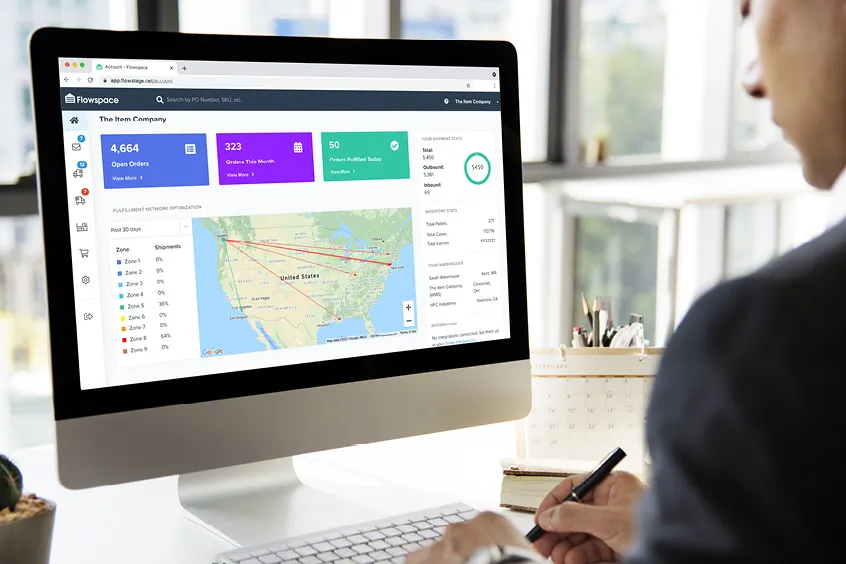
Without a centralized dashboard or modern fulfillment software, 3PLs often leave brands in the dark. Inventory data is delayed, order tracking is fragmented, and fulfillment issues often go unnoticed until customers start complaining.Reel Paper experienced this firsthand. They grew exponentially in 2020, and their 3PL struggled to scale, leading to delayed and inaccurate orders. As a result, Reel couldn’t proactively update customers.This kind of gap creates ripple effects throughout the business, impacting both operational efficiency and brand trust.A fulfillment operations platform eliminates this blind spot. Brands gain real-time visibility through a centralized system and can set custom automation rules to maintain control, minimize manual work, and standardize order workflows across every channel.
Disconnected Tech and Minimal Support
Many legacy 3PLs struggle to integrate with the systems brands rely on, like ecommerce platforms, ERPs, or retail portals. The result is a patchwork of disconnected tools, manual processes, and ongoing workarounds that drain time and increase risk.At the same time, customer support is often inconsistent or hard to reach. Without a reliable point of contact or insight into warehouse operations, your team lacks essential oversight.
Digital Immaturity
Despite the urgent need for transformation, the logistics industry continues to lag. According to Accenture, 72% of industry leaders believe there’s both a lack of digital maturity and no clear roadmap on what needs to happen next.Other studies echo a similar sentiment. A 2024 survey found that 92% of leaders say their tech investments haven’t fully delivered the expected results, with some citing reasons like integration complexity, people capabilities, and data issues.
When a Fulfillment Operations Platform Is Right for Your Brand
Not every brand needs a fulfillment operations platform, but the ones that do feel the pain of outgrowing fragmented tools and sluggish models. To help you assess whether it’s time to shift, here are a few of the most common scenarios we run into:
- Scaling fast, but your fulfillment can’t keep up: Your order volume is growing fast. You’re expanding into new regions and channels, but your 3PL still can’t keep up with volume. Visibility is limited, your team spends hours tracking down order statuses, and you’re starting to see service slip just as growth picks up.
- Premium brand yet fulfillment is risking your reputation: You’re known for your product quality and brand experience, but fulfillment is the weak link. Packaging varies by warehouse, shipping delays are common, and customers notice. With every inconsistency, your team scrambles to recover trust.
- Complex products and workflows, and it’s getting messy: You sell niche, high-touch products (maybe with compliance requirements or customized packaging). However, your current tools are inflexible, so you’re managing manual workarounds, bouncing between systems, and worrying about accuracy as you grow.
- Global disruptions are cutting into your margins: New tariffs and shifting regulations are pushing up your logistics costs, but your 3PL contract is fixed, inflexible, and leaves little room to adapt. You’re locked into specific warehouses and volumes, with no ability to reroute inventory or adjust your strategy in real time.
If one or more of these scenarios sounds familiar, it’s a strong sign your brand is ready to move beyond current solutions and scale with Flowspace’s fulfillment operations platform.
“We fulfill orders through multiple channels, and the Flowspace platform centralizes all fulfillment operations in one place. It’s easy and efficient to manage orders and inventory for all channels, all in one system, where everyone has visibility and knows what’s going on.” – Hector Omoigui, Senior Operations Manager, Reel Paper
Why Flowspace Is the Fulfillment Operations Platform
Flowspace brings the fulfillment operations platform to life through a blend of technology and service. Every feature is designed to give fast-growing brands the control, flexibility, and visibility they need to scale across channels and exceed customer expectations. Here’s how our core platform components work together to power modern fulfillment:
Fulfillment Optimization
Powered by the Network Optimization System (NOS), fulfillment optimization is now a reality for brands that need multiple fulfillment locations.Whereas legacy 3PLs have limited warehouse networks and static routing, the NOS analyzes your historic data and determines the best position for order fulfillment. The resulting cost savings provoke both efficacy and flexibility. You can:
- Slash last-mile costs and boost parcel savings
- Determine if you need to change existing nodes
- Reduce your carbon footprint
- Easily visualize and implement supply chain changes
- Run simulations to model costs
Confident Inventory Management
It’s easy to move on from fragmented tracking. Flowspace provides real-time visibility into inventory, giving your team immediate insight into stock levels and movement across every location.With an inventory management system (IMS) supporting supply chain planning, you can:
- Prevent risking stockouts, delays, or over-ordering
- Create and implement kits
- Reduce excess inventory and improve cash flow
- Maintain accuracy across distributed fulfillment locations
Streamlined Warehouse Workflows
Flowspace’s built-in warehouse management system (WMS) is purpose-built to support DTC and B2B brands, controlling warehouse workflows to meet order requirements, regardless of where you sell.Your team can:
- Standardize workflows across fulfillment locations
- Automate order processing and reduce manual errors
- Monitor operational performance in real time
- Support value-added services like kitting or custom packaging
Orchestrated Order Fulfillment Across Every Channel
A fulfillment operations platform would be incomplete without an order management system (OMS). Bring all your sales channels (present and future) into one connected platform, and allow for seamless order flow from storefront to fulfillment.Whether it’s DTC, B2B, or marketplace, the OMS consolidates order data and applies smart routing rules to ensure accurate, efficient fulfillment.With Flowspace OMS, you can:
- Centralize order intake across Shopify, Amazon, wholesale, and more
- Automate routing based on location, inventory, and service level
- Reduce errors and overselling with real-time sync between systems
- Support omnichannel growth without adding manual step
- Integrate with other OMS platforms
Retail-Ready EDI Integrations
Flowspace integrates directly with major retailers through electronic data interchange (EDI), allowing brands to meet strict retail requirements without building new systems or infrastructure.Whether you're shipping to big-box stores, fulfilling DTC orders on behalf of retail partners, or managing both simultaneously, Flowspace keeps everything connected and compliant.With EDI, you can:
- Maintain compliant workflows for big-box retailers like Target or Walmart
- Enable DTC dropshipping with seamless order and inventory sync
- Gain a multichannel view of all fulfillment activity in one dashboard
- Reduce chargebacks and delays by meeting retailer requirements automatically
AI-Driven Fulfillment
FlowspaceAI makes data instantly accessible, allowing you to act quickly, make changes in a click, and cut down manual work. From reviewing inventory to reducing manual tasks, it helps you make faster, more informed decisions.In fact, customers report up to a 25% increase in day-to-day productivity when using FlowspaceAI.You can:
- Improve overall operational efficiency without adding overhead
- Gain data context on inbound orders, outbound orders, parcel shipments, inventory counts, inventory adjustments, and tags
- Leverage a library of prompts to ask essential operational questions
- Execute changes easily
How Brands Use Flowspace to Scale
Fast-growing brands choose Flowspace not just to keep up with demand, but to turn fulfillment into a competitive advantage. From operational efficiency to omnichannel expansion, these brands prove what’s possible with the right infrastructure and support.
Rukket Sports
Rukket Sports outgrew Amazon FBA during the pandemic and turned to Flowspace to expand into new fulfillment channels. With centralized visibility and automated EDI compliance, they launched on Dick’s Sporting Goods, added Shopify and Walmart, and maintained control without overhauling their inventory strategy.The results:
- Activated retail, DTC, and marketplace fulfillment
- Avoided chargebacks with EDI compliance
- Unified operations across all selling channels
“Flowspace lets us diversify sales channels without adjusting inventory practices.” — Nick Newlin, VP, Rukket Sports
Proper Wild
As Proper Wild’s order volume surged 303% in one year, they needed to scale without sacrificing speed or customer experience. Flowspace helped them fulfill orders from three networked locations and automatically select the most efficient carrier for every order.The results:
- 28% reduction in cost per order
- 70% of orders delivered within two days
- Seamless expansion into retail and convenience
“Flowspace ensures we deliver on our promise to customers.” — Vincent Bradley, CEO, Proper Wild
Why It Matters Now
Ecommerce is evolving faster than ever. Customer expectations are higher, supply chains are more complex, and global disruptions are reshaping the logistics landscape. For fast-growing brands, traditional fulfillment models simply can’t keep pace.A fulfillment operations platform isn’t just a nice-to-have. It’s becoming a strategic imperative. By unifying software, award-winning support, and a flexible network under one connected platform, our platform gives brands the control, visibility, and agility they need to scale sustainably.
“Flowspace is building that future. We’re not just your software provider—we’re your fulfillment partner.”– Ben Eachus. Co-Founder and CEO of Flowspace
Last Updated
category
Related articles















Start simplifying fulfillment with Flowspace today
Discover how Flowspace can simplify fulfillment and help your brand scale faster, with no long-term contracts or hidden commitments.
