14 Crucial Ecommerce KPIs You Need to Track

Table of contents
Talk to a fulfillment consultant today
Do you know which ecommerce KPIs are the most important for your business? If not, you're not alone. Many ecommerce brands track the wrong KPIs, or they don't track them at all. This can lead to missed opportunities and poor decision-making.Ecommerce businesses need to track a variety of key performance indicators (KPIs) in order to measure their success and make informed decisions about their marketing and operations. This blog will look at 14 of the most crucial ecommerce KPIs for brands to track.
Most Essential Ecommerce KPIs
Some of the most essential ecommerce KPIs include conversion rate, average order value (AOV), customer lifetime value (CLTV), net profit, and customer acquisition cost (CAC).
Conversion Rate
Conversion rate is the percentage of website visitors who take a desired action, such as making a purchase. It is a critical KPI for ecommerce businesses because it shows how effective their marketing and sales strategies are.Conversion rate can be calculated by dividing the number of conversions by the number of website visitors. For example, if a website has 100 visitors and 5 of them make a purchase, the conversion rate would be 5%.Conversion rate is important for ecommerce success because it is a direct measure of the effectiveness of a business's marketing and sales efforts. A high conversion rate means that a business is successfully converting visitors into customers. A low conversion rate means that a business needs to improve its marketing and sales strategies.Conversion rate can also impact other ecommerce metrics, such as average order value (AOV) and customer lifetime value (CLTV). A high conversion rate can lead to higher AOV and CLTV because it means that a business is converting more visitors into customers who are spending more money and returning to the business more often.
Average Order Value (AOV)
Average order value (AOV) is the average amount of money that customers spend per order. It is a valuable sales KPI for an ecommerce business because it can help them understand how much they are making from each customer.AOV can be calculated by dividing the total number of sales by the number of orders. For example, if a business has $10,000 in sales and 100 orders, the AOV would be $100.AOV is important because it can help businesses understand how much they are making from each customer. This information can be used to make decisions about pricing, customer service, marketing, and product selection. For example, if a business has a low AOV, they may want to consider lowering their prices to attract any potential customers. Or, they may want to focus on selling higher-margin products.
Customer Lifetime Value (CLTV)
Customer lifetime value (CLTV) is the total amount of money that a customer is expected to spend with a business over their lifetime. Along with repeat purchase rate, it is a valuable ecommerce metric for brands to measure because it can help them understand the long-term value of their customers.CLTV can be calculated by dividing the total revenue from a customer by the number of years that they have been a customer. For example, if a customer has spent $1,000 over 5 years, their CLTV would be $200. CLTV is important because it can help businesses understand how much money they can expect to make from each customer over their lifetime. This information can be used to make decisions about marketing, customer loyalty and retention tactics, and product development.
Net Profit
Net profit is the amount of money that a business makes after all expenses have been taken into account. It is the most important ecommerce key performance indicator for businesses because it measures the overall health of the business.Net profit can be calculated by subtracting all expenses from the total revenue. For example, if a business has $100,000 in revenue and $50,000 in expenses, their net profit would be $50,000. The net profit margin can also be obtained from here, by taking this figure and dividing it by net revenue to get a percentage.Net profit is important because it measures the overall health of the business. A high net profit means that the business is making a lot of money and is in a good financial position. A low net profit means that the business is not making much money and may be struggling financially.
Customer Acquisition Cost (CAC)
Customer acquisition cost (CAC) is the cost of acquiring a new customer. It is a valuable metric for ecommerce brands because it can help them understand how much they are spending to acquire new customers.CAC can be calculated by dividing the total cost of acquiring new customers by the number of new customers acquired. For example, if a business’ ad spend is $10,000 to acquire 1,000 new customers, their CAC would be $10.CAC is important because it can help businesses understand how much they are spending to acquire new customers. This information can be used to make decisions about marketing and pricing.
Additional Important Ecommerce KPIs
There are a number of other important KPIs that ecommerce brands should track. These KPIs can help businesses better understand customers behavior, optimize their marketing campaigns, and improve their bottom line.
Cost per Acquisition (CPA)
Cost per acquisition (CPA) is the average amount of money that an ecommerce store spends to acquire a new customer. It is calculated by dividing the total cost of acquiring new customers by the number of new customers acquired. CPA is an important metric because it can help businesses understand how much they are spending to acquire new customers. This information can be used to make decisions about marketing and product pricing.
Cost of Goods Sold (COGS)
Cost of goods sold (COGS) is the direct cost of producing the products that an e commerce business sells. It includes the cost of materials, labor, and overhead. COGS is an important metric because it can help brands understand their profitability. By tracking COGS, businesses can see how much money they are making on each sale.
Return on Ad Spend (ROAS)
Return on ad spend (ROAS) is the amount of revenue that an ecommerce business generates from each dollar spent on advertising. It is calculated by dividing the total revenue generated by ads by the total amount of money spent on ads. ROAS is an important metric because it can help brands understand the effectiveness of their marketing campaigns.
Shopping Cart Abandonment Rate (SCAR)
Shopping cart abandonment rate (SCAR) is the percentage of shoppers or website traffic who add items to their shopping cart but do not complete the checkout process. It is calculated by dividing the number of abandoned shopping carts by the number of completed checkouts.Shopping cart abandonment rate is an important metric because it can help businesses understand how well their checkout process is working. By tracking SCAR, brands can identify areas where they can improve the checkout process for any website visitor and reduce shopping cart abandonment rates.
Product Performance KPIs
Product performance KPIs track the performance of individual products. These metrics can include sales, revenue, gross profit margin, and return rate.Product performance KPIs are important because, in collaboration with warehouse KPIs, they can help businesses understand which products are their most profitable and which ones need improvement. This information can be used to make decisions about product pricing, marketing, and product inventory management.
Basket Level Performance
Basket level performance tracks the composition of customers' online shopping carts. These metrics can include the average number of items in a cart, the average order value, and the percentage of items that are abandoned.Basket level performance is important because it can help brands understand how customers are shopping. This information can be used to improve the checkout process and increase sales.
Net Promoter Score (NPS)
Net promoter score (NPS) is a customer satisfaction metric that measures how likely customers are to recommend a business to others. It is calculated by asking customers a question such as, "How likely are you to recommend our company to a friend or colleague?" and scoring their response on a scale of 0 to 10.NPS is an important metric because it can help brands understand how satisfied their customers are. By tracking NPS, businesses can identify areas where they can improve the customer experience.
Non-Branded Product Performance
Non-branded product performance tracks the performance of products that are not the business's own brand. These metrics can include sales, revenue, and profit margin.Non-branded product performance is important because it can help brands understand how their products compare to competitors' products. This information can be used to make decisions about pricing, marketing, and product development.
Device of Choice
Device of choice tracks the devices that customers are using to shop online. These metrics can include the percentage of customers who are using desktop computers, laptops, tablets, and smartphones.Device of choice is important because it can help businesses understand how customers are shopping. This information can be used to optimize the website and marketing campaigns for different devices and maximize customer satisfaction.
Optimize Your Ecommerce KPIs with Flowspace
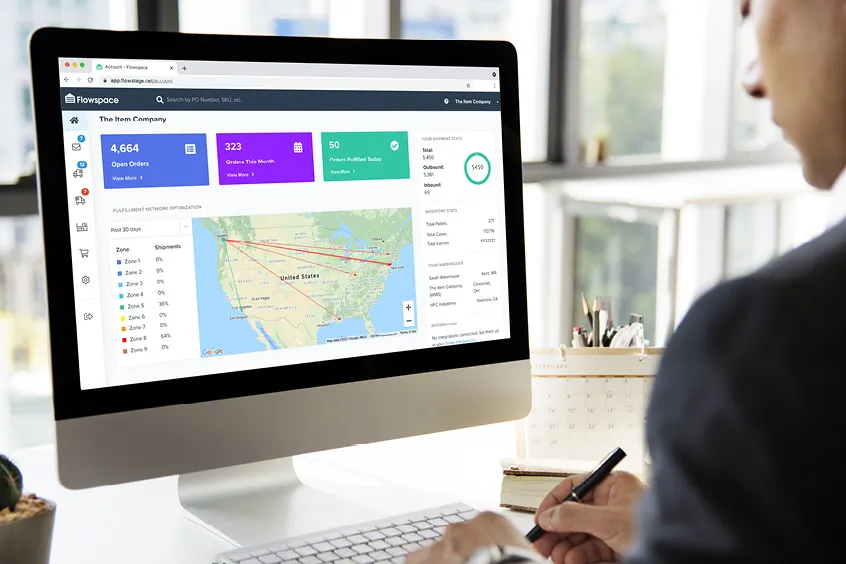
Flowspace helps ecommerce businesses improve their KPIs with best-in-class fulfillment management solutions. Flowspace provides scalable ecommerce logistics services and software, real-time visibility and analytics, and a flexible, nationwide network of top-notch warehouse and fulfillment facilities.Flowspace's warehouse and fulfillment solutions help businesses optimize their logistics operations by storing and allocating inventory efficiently, enabling faster order fulfillment, and reducing shipping costs.Flowspace's real-time visibility and analytics give businesses valuable insights into their supply chain with the ability to track major supply chain KPIs and more. With advanced tracking and monitoring capabilities, businesses can keep a close eye on their inventory, shipments, and order status. This access to real-time data and analytics empowers businesses to make informed decisions, identify areas for improvement, and proactively address supply chain bottlenecks.Flowspace's ecommerce logistics services are scalable and flexible, so businesses can adapt to their evolving needs. Whether businesses experience seasonal spikes in demand or require additional fulfillment capacity, Flowspace has them covered. These flexible solutions ensure that businesses have the agility to meet changing market dynamics while maintaining efficiency and cost-effectiveness.Contact Flowspace today to learn more about how we can help you improve your ecommerce KPIs!
Last Updated
category
Related articles





















































Start simplifying fulfillment with Flowspace today
Discover how Flowspace can simplify fulfillment and help your brand scale faster, with no long-term contracts or hidden commitments.
