Flowspace Fulfillment FAQs: Everything You Need to Know

Table of contents
Talk to a fulfillment consultant today
Modern fulfillment is more complex than ever. Fast-growing CPG and subscription brands need to support DTC, retail, and marketplace orders—while maintaining speed, accuracy, and visibility across every channel. Flowspace is a software-driven fulfillment provider built to help brands scale without the limitations of traditional 3PLs. By combining distributed warehouse coverage with centralized order and inventory management software, Flowspace gives brands more control, flexibility, and real-time insight into post-purchase operations.This FAQ breaks down how Flowspace helps brands onboard faster, fulfill across channels, and scale.
1. What is Flowspace?
Flowspace is a modern fulfillment provider that combines powerful technology with expert fulfillment operations to deliver seamless and scalable execution that moves with your business. Our platform centralizes and controls order routing, inventory placement, and network optimization, while Flowspace-trained operations execute fulfillment across a distributed warehouse network—giving brands real-time visibility and the flexibility to grow without fixed infrastructure.
2. What types of brands see the best results with Flowspace?
Flowspace is built for fast-growing CPG and subscription brands selling direct-to-consumer, wholesale, marketplace, B2B, and through retail partners. Industries served that see strong results include:
- Food & beverage
- Beauty & hygiene
- Wellness & supplements
- Pet products
- Furniture & home goods
- Sports & outdoors.
Brands that require compliant storage, DTC and subscription fulfillment, or omnichannel support are typically a strong fit.
3. How does onboarding with Flowspace work?
Onboarding starts with a consultation to understand your products, channels, and service-level requirements. From there, the Flowspace team helps you:
- Connect ecommerce, marketplace, and retail systems
- Map SKUs, bundles, and subscription configurations
- Plan inbound shipments into the right fulfillment locations
- Set up order routing rules, SLAs, and packing directives
- Test orders before fully cutting over
Most brands go live in weeks rather than months, depending on catalog complexity and integrations.
4. Where are Flowspace’s fulfillment centers located?
Flowspace operates a distributed network of fulfillment centers across the United States and parts of Canada, with coverage near major metro areas. Inventory is positioned based on your demand patterns. Therefore, orders ship from locations closest to your customers, helping reduce transit time and shipping costs.
5. Can Flowspace handle fast-growing, seasonal, or promotional volume?
Yes. Flowspace is designed for brands with dynamic demand, including seasonal peaks, retail promotions, product launches, and subscriber growth. The flexible infrastructure and software-driven routing make it easier to scale up quickly and then normalize without committing to fixed, long-term warehouse footprints.
6. What order types does Flowspace support?
Flowspace supports a wide range of CPG fulfillment scenarios, including:
- Direct-to-consumer ecommerce orders
- Subscription programs and curated boxes
- Wholesale and B2B shipments
- Retail replenishment with EDI compliance
- Marketplace orders (such as Amazon, Walmart, and TikTok Shop)
- Kits, variety packs, multi-SKU bundles, and promotional assemblies
7. What software and integrations does Flowspace provide?
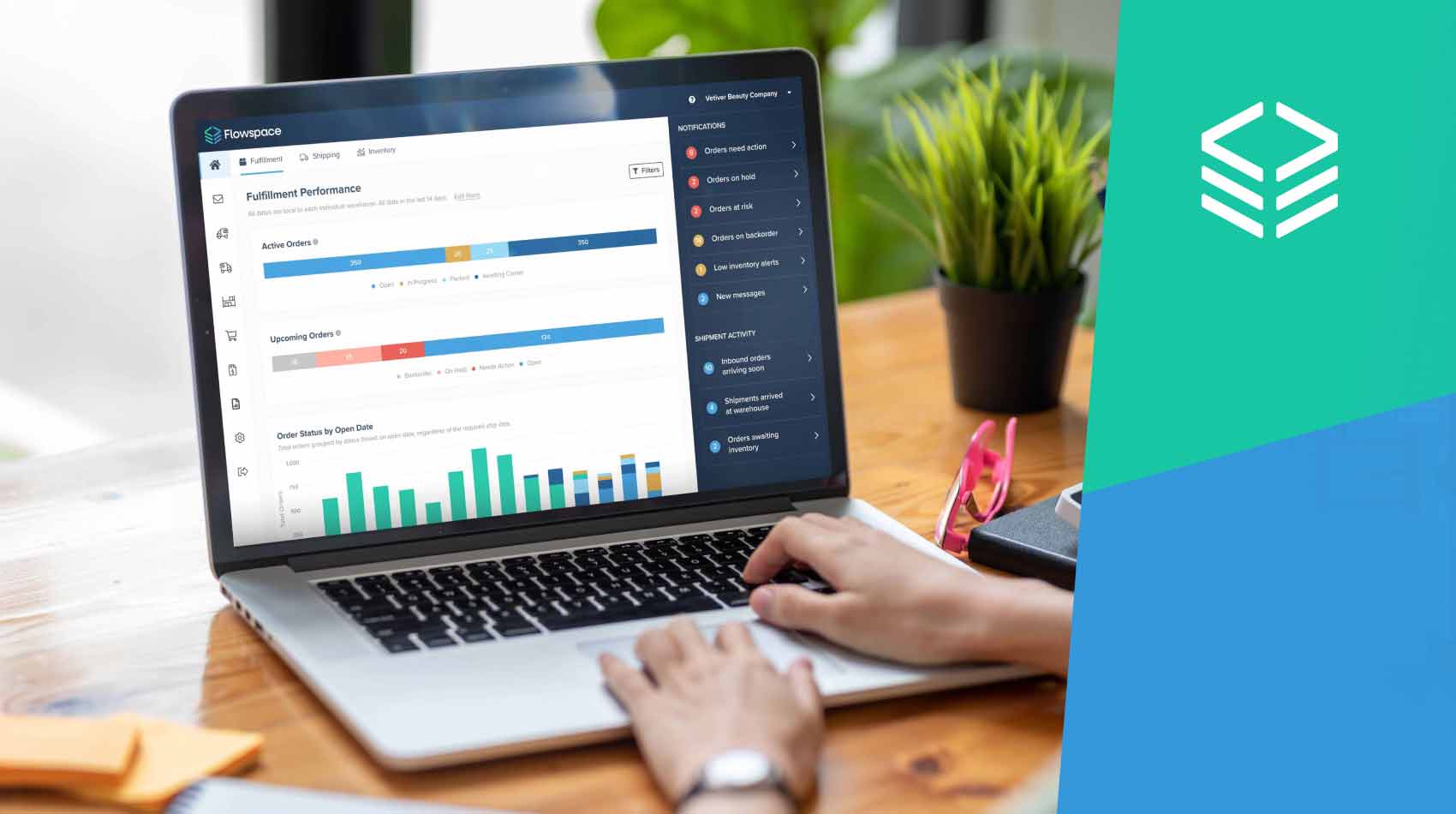
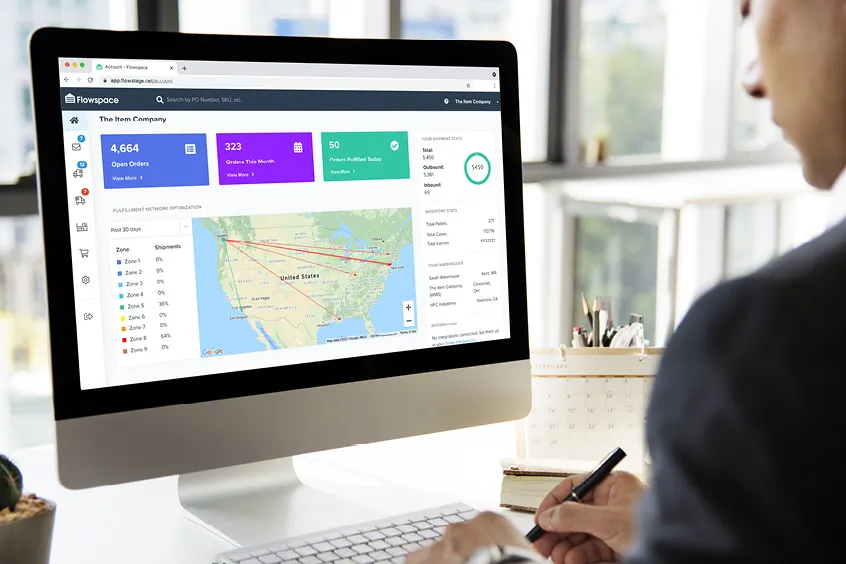
Flowspace provides a unified platform that centralizes order management, inventory management, warehouse operations, and network optimization. It integrates with leading ecommerce platforms, marketplaces, and retail systems so you can manage post-purchase operations in one place.Out-of-the-box integrations cover major carts and marketplaces, and the platform also supports EDI for retail fulfillment as well as APIs for custom and enterprise systems.
8. How do I move inventory into Flowspace’s network?
Inventory can be shipped directly from your manufacturers, copackers, or existing warehouses into your assigned Flowspace locations. You’ll receive receiving and labeling requirements, along with guidance on inbound scheduling, pallet configuration, and compliance needs such as FDA, lot tracking, or expiration management, so inventory is received quickly and accurately.
9. How does Flowspace ensure accuracy, compliance, and quality?
Flowspace combines standardized operating procedures with real-time software controls. This includes enforced scans, packing instructions, and detailed reporting. For regulated or sensitive categories such as food and beverage, wellness, and beauty, Flowspace’s infrastructure includes compliant facilities and workflows like lot and expiration tracking.
10. What kind of visibility will my team have?
Through the Flowspace platform, your team can:
- Monitor orders from placement through delivery
- Track inventory across all locations, channels, and SKUs
- See SLA performance and exception alerts in real time
- Review analytics on cost, speed, and carrier performance
This visibility helps operations, customer support, finance, and leadership teams get answers quickly without relying on spreadsheets or warehouse emails.
11. Can Flowspace handle returns and reverse logistics?
Yes. Flowspace supports returns and reverse logistics based on your brand’s policies. Returned items can be inspected, restocked, quarantined, or disposed of according to your rules. Return flows and inventory disposition are visible within the platform, so you can understand the impact on inventory and margins.
12. How does pricing work?
Pricing is tailored to your brand based on factors such as:
- Order volume and shipment mix (DTC, B2B, retail)
- Storage footprint and number of fulfillment locations
- Product characteristics and handling requirements
- Value-added services like kitting, custom packaging, and lot control
After reviewing your data and requirements, Flowspace provides a clear proposal with transparent, itemized pricing.
13. Does Flowspace support custom packaging and subscription experiences?
Yes. Flowspace supports branded boxes, mailers, inserts, gift messaging, and complex kitting and subscription configurations. This allows brands to run subscription programs, seasonal bundles, and promotions while maintaining a consistent unboxing experience across channels.
14. What level of support will my brand receive?
Flowspace customers receive dedicated operational and account support, along with technical resources for integrations and data needs. The team works as an extension of your operations group, helping monitor SLAs, optimize inventory placement, and continuously improve fulfillment performance.
15. How do we get started with Flowspace?
To get started, request a quote or schedule a demo. Share details about your catalog, order volume, channels, and target SLAs. Flowspace will recommend an initial network design, outline onboarding steps, and provide pricing so you can determine the right timeline to launch.
16. Is there a minimum order volume or contract commitment?
Flowspace is designed for brands shipping 1,000 or more orders per month that need fast, reliable fulfillment and the ability to scale across channels. Minimums and commitments vary based on factors like order volume, fulfillment complexity, and service-level requirements, but the focus is on ensuring the platform and network can deliver meaningful value for your business.
During the evaluation process, Flowspace works with you to determine the right setup based on your current volume and growth plans.
17. How does Flowspace compare to traditional 3PLs?
Traditional 3PLs typically operate individual warehouses with limited software and manual processes. Flowspace combines distributed fulfillment coverage with centralized software, giving brands more flexibility in inventory placement, better visibility across channels, and the ability to scale or rebalance without changing providers.Flowspace is designed for brands that have outgrown basic 3PL models and need more control, transparency, and adaptability.
18. What does implementation look like if I’m switching from another 3PL?
Switching from an existing 3PL is a common Flowspace use case. The onboarding team helps plan the transition by mapping SKUs and order flows, coordinating inventory transfers, testing orders, and phasing locations or channels if needed. The goal is a controlled transition that minimizes disruption and protects the customer experience.
19. Is Flowspace a 3PL with software, or a software platform with a fulfillment network?
Flowspace is a software-first fulfillment platform powered by nationwide fulfillment centers. The software serves as the center of control for inventory, orders, and performance, while Flowspace’s nationwide locations execute fulfillment. This model enables optimization that traditional warehouse-centric providers cannot support.
20. Who on my team typically uses the Flowspace platform?
The Flowspace platform is used across teams, including operations, logistics, customer support, and leadership. By centralizing fulfillment and inventory data in one system, Flowspace reduces reliance on spreadsheets, emails, and disconnected warehouse tools.
21. How does Flowspace manage SLAs and fulfillment performance?
Flowspace tracks SLAs through standardized operating procedures and real-time software monitoring. Brands have visibility into fulfillment speed, accuracy, and exceptions at the order, location, and network level, enabling proactive issue resolution and continuous optimization.
22. What happens if my fulfillment needs change over time?
Flowspace is designed to adapt as your business evolves. As volume, channels, products, or service requirements change, Flowspace's infrastructure and software can adjust by adding locations, supporting new channels, or modifying workflows. This flexibility allows brands to grow without replatforming or switching fulfillment partners.
Fulfillment That Grows With You
As brands expand across channels and volume fluctuates, fulfillment needs to stay fast, accurate, and adaptable. Flowspace brings together technology and operations to support growth without locking brands into rigid models.Get started today.
Last Updated
category
Related articles



















Start simplifying fulfillment with Flowspace today
Discover how Flowspace can simplify fulfillment and help your brand scale faster, with no long-term contracts or hidden commitments.
