What Is The Role of EDI in Ecommerce Fulfillment?
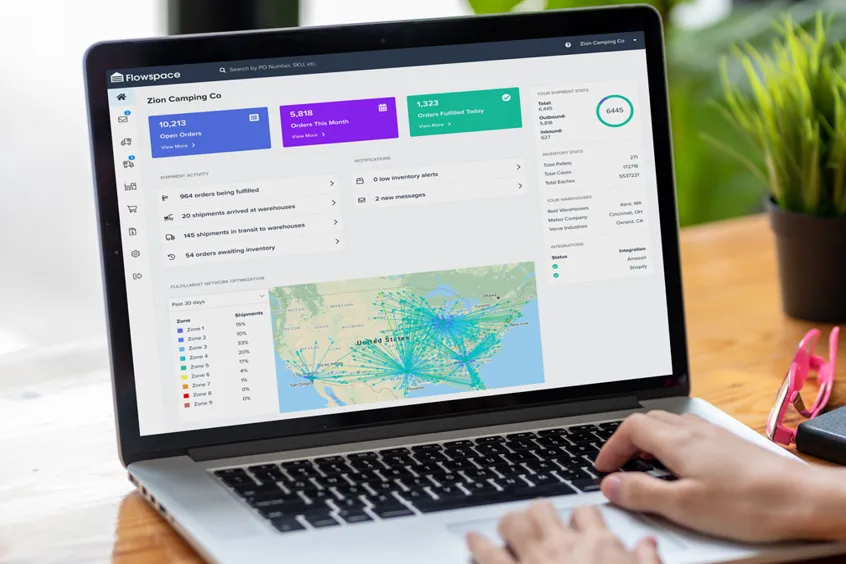

Table of contents
Talk to a fulfillment consultant today
Updated March 17, 2024What is EDI, you may ask? Electronic data interchange (EDI) is an essential part of a successful ecommerce business. It involves the use of automated technology to share information between two parties, commonly an ecommerce business and its trading partners.
3 Types of EDI
As mentioned, EDI allows for the paperless exchange of business information like orders and invoices. There are three primary EDI formats facilitating this secure data transmission:
- ANSI X12: Established by the American National Standards Institute's Accredited Standards Committee X12, this format is widely used in the United States. It is designed based on national standards and supports financial transactions across different systems without requiring a centralized payment hub.
- EDIFACT (Electronic Data Interchange For Administration, Commerce, and Transport): An international EDI standard developed by the United Nations, EDIFACT is used globally and includes a broad library of business document messages such as orders, invoices, and shipping notices.
- XML (Extensible Markup Language): An open-source language that allows for flexible data exchange by letting businesses define their own exchange rules. Although offering greater adaptability than ANSI X12 or EDIFACT, XML requires more effort and resources to implement.
These three EDI formats provide diverse options for secure and efficient data interchange, paving the way for streamlined operations in B2B ecommerce.
What is the relationship between EDI and B2B ecommerce?
B2B ecommerce is often seen as the evolution of EDI, both similar in structure, though not the same. However, used in tandem, they can create a solid distribution strategy. EDI in ecommerce is the transfer of information between computers to automate recurring transactions. In contrast, B2B ecommerce involves transactions between a business and its trading partners through a proprietary network connection.
What is the difference between EDI and B2B ecommerce?
EDI ecommerce is primarily used best for recurring order management, order fulfillment and shipment tracking, invoicing and accounting, and other operational cost reduction capabilities.B2B ecommerce shares some of these same values, and supports product expansion among existing customers, and generates new customer leads.However, the biggest differences are apparent when it comes to order size, customer communication, and order tracking.
Order size
EDI typically handles large, recurring orders, while B2B commerce typically deals with ad-hoc ordering or inventory accounting and management which has more complex business processes.
Customer communication
B2B ecommerce also provides a way to interact with customers online versus limiting it to only the business transaction as with an EDI solution. It strengthens the customer connection by allowing customers to browse products, stay updated on deals and promotions, and be informed of brand updates while online shopping.
Order tracking
With B2B ecommerce, customers can track their online orders and receive notifications about delivery status. An EDI system for ecommerce doesn’t stretch its capabilities beyond the computer-to-computer interaction necessary to automate transactions.
Can EDI and B2B ecommerce be meshed to create a strong distribution strategy?
Both EDI and B2B ecommerce create greater efficiencies for businesses by automating the order process, which is necessary for today’s fast-growing marketplace. However, combining the two strategies give businesses a competitive advantage to drive revenue and customer retention.It allows ecommerce businesses to modernize the online ordering experience and create opportunities, such as providing real-time inventory and pricing, improving tracking capabilities, and giving customers access to a catalog of products.
Why do B2B businesses need EDI integration at the data level?
Automated transactions
Automation is the key to efficiency. EDI integration allows ecommerce businesses to electronically exchange data, such as purchase orders and invoices. EDI documents are translated into an EDI format that can be understood by the computer systems at each company without the need for paper documents. EDI messages can automatically be sent using pre configured workflows.
Reduced errors
By automating manual business processes, an EDI system eliminates the possibility of human error when processing data. Additionally, it eliminates time-consuming tasks and manual methods, leading to quicker turnaround times and greater satisfaction for customers. It also frees up time for ecommerce leaders to focus on other strategies and responsibilities necessary for growth.
Increased security
With an EDI program, ecommerce transactions are performed through a secure network and connection, which decreases security risks and data inaccuracies. It also makes it easier to manage data for compliance measurements and potential auditing purposes.
What are the benefits of EDI and B2B ecommerce joining forces at the people level?
Mass communication
Joined together, EDI integration and B2B ecommerce allows businesses to communicate to their audience and partner base in real-time and without relying on paper documentation. It also assures all parties are reviewing the same information as it comes in without waiting for end-of-the-day updates.
Compliance initiatives
The benefits also allow businesses to automatically communicate compliance needs and shipping formats to the brand’s standards and as required by packaging protocols for different types of products.
Performance-related data
B2B commerce also adds an edge to business growth by storing and sharing performance-related data to quickly resolve any discrepancies or disputes to improve quality control.
How Flowspace can help
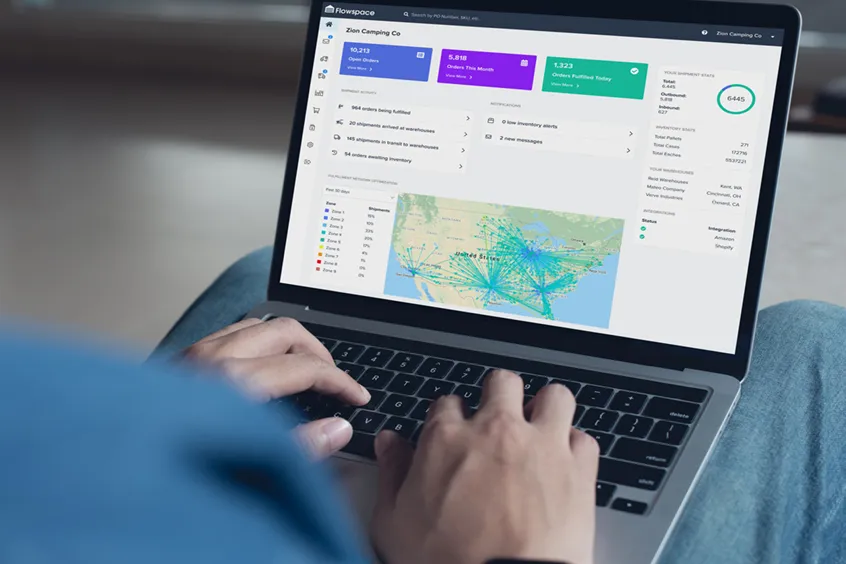
Automated and accurate inventory management is crucial when creating an efficient, effective ecommerce fulfillment strategy. With EDI for ecommerce integration technology, Flowspace integrates and coordinates all parts of the supply chain in real-time, allowing businesses to create a more seamless customer experience.Streamline your operations with EDI automation and allow technology to automate repetitive tasks in less time and lower cost. Flowspace offers flexible, customized solutions to meet your fulfillment goals. With our fulfillment software, you can review inventory levels, manage stock, and create purchase order reports with just a few clicks. Get in touch today.Sources
- Sitecore. The relationship between EDI and B2B ecommerce. https://www.sitecore.com/blog/commerce/edi-and-b2b-ecommerce
- Digital Commerce 360. Why EDI still has a big role to play in B2B ecommerce. https://www.digitalcommerce360.com/2020/06/01/why-edi-still-has-a-big-role-to-play-in-b2b-ecommerce/
Last Updated
category
Related articles
























Start simplifying fulfillment with Flowspace today
Discover how Flowspace can simplify fulfillment and help your brand scale faster, with no long-term contracts or hidden commitments.
