3PL billing is broken: Why brands struggle to understand fulfillment costs


Table of contents
Talk to a fulfillment consultant today
3PL billing is one of the least understood parts of fulfillment—and one of the most frustrating for growing brands. For many, the issue is not just the total spend, but the lack of visibility into what they are actually paying for.
Too often, teams receive large invoices with limited detail, delayed charges, and vague fee descriptions that make it hard to connect cost back to warehouse activity. The result is confusion, weak forecasting, impaired decision-making, and friction between brands and fufillment providers.
The best 3PL relationships are built on operational trust. Billing should support that trust, not undermine it. Moreover, strong 3PL invoicing should help teams understand, manage, and explain fulfillment spend as it happens.
Why 3PL invoices are so hard to understand
Many 3PL invoices are difficult to read because they show large totals with little itemization. Brands often see broad categories like labor or warehouse fees without enough detail to understand what actually drove the charge.
Timing makes the problem worse. When billing arrives well after the activity occurs, it becomes harder to connect charges to receiving, storage, outbound labor, or parcel—be it across inbound or outbound logistics workflows. By the time a team reviews the invoice, the operational context is often gone.
As a result, fulfillment billing becomes harder to use as a management tool. Teams can see that costs changed, but not why—making it difficult to understand true fulfillment spend or identify what needs attention.
The hidden fees that erode trust in 3PL billing
Unexpected charges are not always wrong and, in many cases, they reflect real work or added complexity. The problem is hidden 3PL fees.
Surge charges, peak-related fees, compliance charges, and accessorials may all be legitimate, but they still need context. If the operations team cannot see what triggered the fee, the invoice starts to feel arbitrary.
General labor charges are another common issue. A line item labeled “labor” says very little. Was it tied to receiving, rework, retail prep, returns, or cycle counts? Without specificity, brands cannot tell whether the cost was expected, necessary, or preventable.
Administrative or miscellaneous charges tend to create the same tension. Even when the work behind them is real, poorly defined 3PL fees create billing friction.
That is why trust breaks down so quickly: unclear charges are hard to validate, even when they're totally legitimate.
Why poor billing visibility becomes a bigger operational problem
Poor billing visibility doesn't end at financial inconvenience. It also introduces operational problems.
First, it becomes harder to validate whether charges are accurate. Without itemization, even a basic 3PL invoice audit can turn into a manual back-and-forth between finance, operations, and the fulfillment provider.
Second, it becomes harder to forecast costs as order volume changes. Brands need to know how receiving, labor, storage, and parcel spend will move during promotions, seasonality, and growth. If the billing model is vague, forecasting becomes guesswork.
Third, teams struggle to answer simple internal questions for stakeholders. Why did fulfillment cost per order increase? Why did labor spike? Why did storage costs rise? When billing lacks detail, even basic analysis becomes harder than it should be. And once finance teams start questioning every invoice, the provider relationship shifts from partnership to policing.
What transparent 3PL billing should look like
Better 3PL billing starts with itemization. Operators should be able to see costs broken out by charge type, including receiving, storage, labor, parcel, returns, and accessorials. That is the baseline for itemized 3PL billing.
Charges should also tie back to actual operational activity. If labor is billed, operations teams should be able to understand what work drove it. Additionally, if accessorials appear, the triggering event should be clear.
Just as important, billing should not live in a silo; for modern operators, cost visibility must feel connected to fulfillment activity, not separated from it.
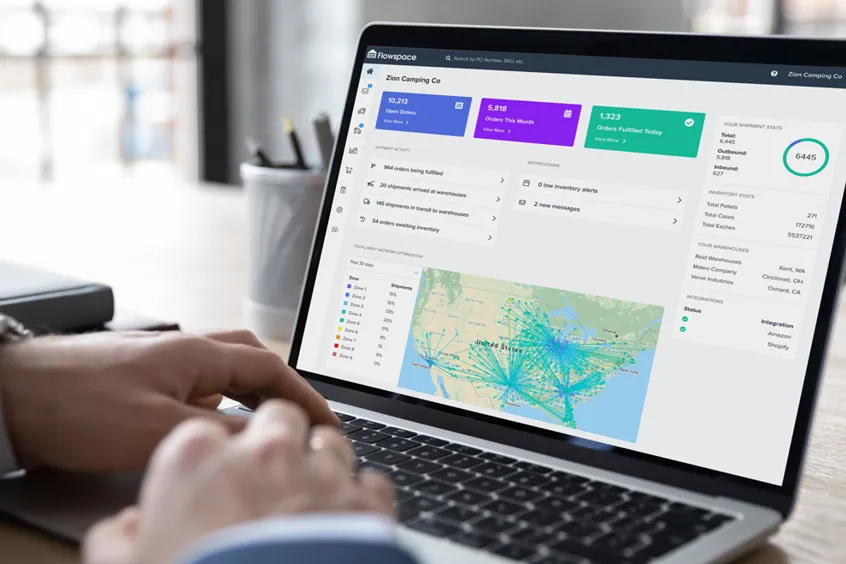
That is where strong reporting and modern 3PL reporting software can make a real difference. Providers like Flowspace make it easier to view spend across parcel, labor, storage, and other cost categories without forcing teams into manual reconciliation.
Why real-time 3PL billing matters: The Flowspace difference
Traditional monthly invoicing creates lag. Real-time 3PL billing helps reduce that gap.
When teams can see charges closer to when activity happens, they can identify changes sooner, investigate issues faster, and avoid end-of-month surprises. That matters most during promotions, seasonal peaks, and other periods when fulfillment costs can move quickly.
But frequency alone is not enough. Visibility within a fulfillment platform needs to be continuous and actionable.
Flowspace takes this a step further with daily, automated billing that is itemized and categorized in real time. Instead of waiting for a single invoice, operators can track how costs evolve day by day across relevant categories.
This approach makes it easier to understand what is driving spend while activity is still happening—not weeks later. It also gives teams tighter control during periods of volatility, when fulfillment costs are most likely to shift.
For brands that value agility, real-time visibility is not just a finance improvement. It is an operational advantage.
How to evaluate a 3PL’s billing transparency
When comparing providers—or evaluating what to expect from a 3PL generally—brands should look closely at how billing works in practice. Ask questions such as:
- How often is billing updated?
- Are charges itemized and categorized? If so, how deeply?
- Are labor and accessorials tied to real activity?
- Can teams pull spend data without manual effort?
Those questions matter because billing transparency supports forecasting, auditing, and trust. In other words, providers that prioritize 3PL pricing transparency make it easier for brands to understand costs before they become problems.
Flowspace makes invoicing transparency a core part of the 3PL relationship
Operators need more than a monthly invoice. To best understand the impact and value of a current partnership, they need visibility into where charges are coming from, how costs change with volume, and which activities are driving spend.
That is why better real-time 3PL invoicing matters. Flowspace delivers proactive reporting with daily, automated, itemized billing—giving teams real-time insight into spend across parcel, labor, storage, and more.
The result is fewer surprises, faster decisions, greater control over fulfillment costs, and a stronger relationship by making costs easier to explain, navigate, and trust.
Ready to eliminate billing guesswork? Request a quote and see how Flowspace brings real-time transparency to 3PL billing.
FAQs: 3PL billing and invoicing
What is 3PL billing?
3PL billing is how a third-party logistics provider charges for fulfillment services, including receiving, storage, pick and pack labor, shipping, returns, and accessorial fees.
Why is 3PL billing so hard to understand?
3PL billing is often difficult to understand because invoices lack itemization, charges are delayed, and fees are not clearly tied to specific warehouse activities.
What are common hidden 3PL fees?
Common hidden 3PL fees include surge or peak charges, compliance fees, labeling or rework costs, general labor charges, and poorly defined administrative or miscellaneous fees.
What does itemized 3PL billing mean?
Itemized 3PL billing breaks down charges by specific activities—such as receiving, storage, labor, and parcel—so teams can clearly see what is driving fulfillment costs.
Why does real-time 3PL billing matter?
Real-time 3PL billing gives teams visibility into costs as they happen, helping reduce surprises, improve forecasting, and identify cost changes during promotions or peak periods.
How can brands audit a 3PL invoice?
A 3PL invoice audit involves reviewing charges against actual fulfillment activity, verifying labor and accessorials, and ensuring all fees are clearly defined and properly categorized.
Last Updated
category
Related articles



















Start simplifying fulfillment with Flowspace today
