What Is Ecommerce Fulfillment Automation & Should You Implement It?

Table of contents
Talk to a fulfillment consultant today
Ecommerce fulfillment automation integrates technology with business resources to create a seamless process from start to finish. By adding automation to established best practices, it speeds up processes, creates efficiencies, reduces human errors, and saves on costs and time.
What does ecommerce fulfillment actually mean?
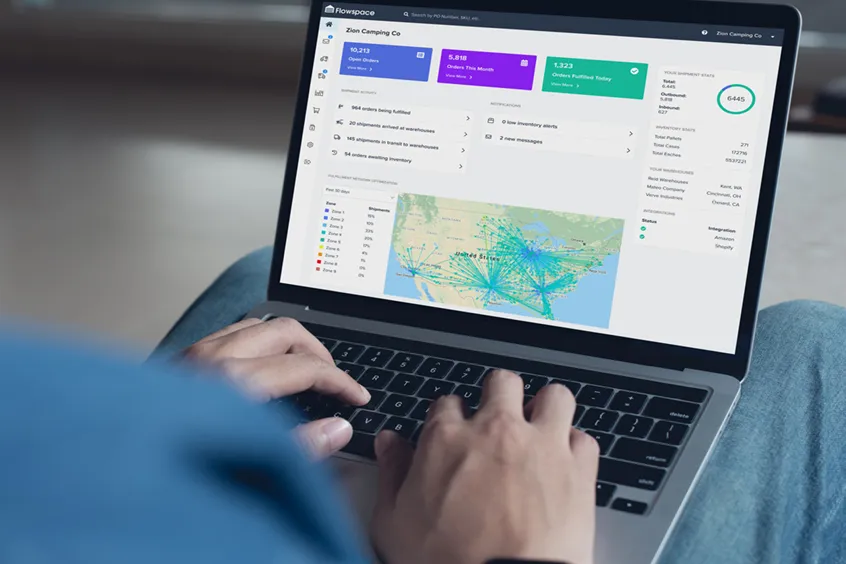
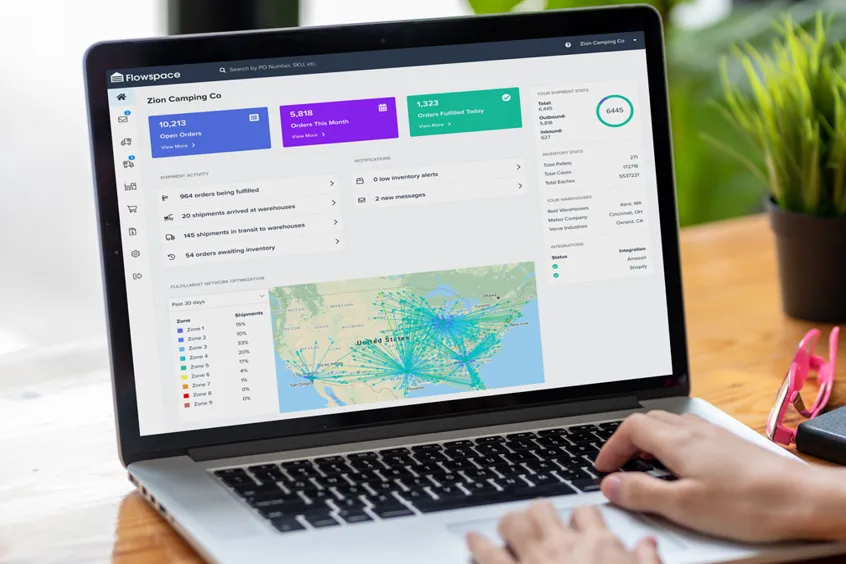
Ecommerce fulfillment is defined by the process of inventory storage and management, picking and packing products, and shipping online orders to customers. To create workflow efficiencies and leave time to focus on other business growth matters, many ecommerce businesses benefit from working with expert third-party logistics providers like Flowspace. When utilizing Flowspace software to manage an ecommerce automated fulfillment service, businesses can control all their supply chain operations in one central space. All sales channels and storefronts are integrated to provide accurate inventory levels and customer insights in real-time. Some of the benefits of automated order fulfillment include:
Optimized Warehousing
Flowspace uses an algorithm to identify the optimal fulfillment center for your customers for prompt, efficient delivery of orders. With a nationwide distribution network and more than 33 million square feet of fulfillment space, the ideal warehouse location for any brand or circumstance is accessible at any time. Related:How Do Fulfillment Centers Work?
Faster Order Processing
Rather than fulfilling purchase orders manually, ecommerce fulfillment automation allows for faster order processing through secure and effective data exchange. It allows administrative tasks to be automated and therefore, frees up time and resources for other parts of building business strategy. This is perfect for holiday fulfillment when order volume is usually higher than other times of the year.
Speedier Delivery Times
Customers expect fast delivery time as part of their purchasing experience. Fulfillment automation creates workflow efficiencies to maintain speedy delivery times and the delivery of products in the way designated by the brand. Therefore, customers receive a satisfactory experience from the time they place an order to the time it’s delivered to their front door.
Smoother Returns Management
Ecommerce automated order fulfillment also provides smoother returns management by setting up tracking and alerts for customers to know when their package is arriving and how they can make a return.
Improved Customer Experience
Part of achieving ecommerce success is reviewing customer insights and product trends to make predictions about future purchases. Ecommerce fulfillment technology can also create automated reports which can help determine lifetime customer value to improve the experience at different points along the supply chain.
How do integrations play a role in ecommerce fulfillment automation?
Ecommerce integrations allow businesses to connect all shopping carts, storefronts, and marketplaces automatically and make updates based on shared information. It provides real-time visibility across all systems regarding current stock levels and purchases, as well as providing shipping and tracking information for customers to keep up-to-date with product delivery. There are several benefits that support scalability and profit growth for businesses when integrations are in place.
Eliminates Manual Data Entry
Integration through fulfillment warehouse automation eliminates the risk of human error and increases data accuracy and process efficiency. It also allows for real-time data to provide updates as they’re happening versus waiting for all systems to sync up at the end of a day or week.
Simplifies Business Management
Ecommerce fulfillment integration is funneled to and controlled from one central system to simplify business management across all channels. It provides multiple tools and resources to make informed decisions with regard to inventory management, revenue trends, customer insights, and other important data points.
Enables Customer Notifications
Ecommerce fulfillment automation also instills tracking information to notify customers when orders have been skipped and when restocks are necessary. Research shows that 45% of shoppers actively seek out businesses with delivery tracking in place, and nearly 70% are less likely to repurchase from a retailer if packages were delayed without notification.1
What are determining factors when considering whether automation is worth it as an ecommerce seller?
As businesses begin to grow and expand their customer base, it can be challenging to keep up with the supply and demand without incorporating automation. Here are key areas to consider whether or not it’s time to introduce a fulfillment automation solution.
Task Efficiency
One of the biggest reasons to consider whether fulfillment center automation is worth it is task efficiency. A few examples of manual, repetitive tasks that automation can help reduce include: triggering shipping notifications for customers, identifying best-selling items, managing refunds, pinpointing best sales channels, and replenishing an inventory supply. In the world of ecommerce, the faster, the better in a customer’s eyes, which means when there’s a lag in any part of the fulfillment process, it affects the entire workflow.
Cost Savings
Compare the costs of an ecommerce fulfillment automation software solution with the cost for roles necessary to manually perform the work. For growing businesses with multiple online and offline sales channels, this allows operations managers to free up their time for strategy, organization, and other growth ideas versus spending time with inventory, shipping, and other workflows. Furthermore, the cost of losing customers due to delays and a disorganized purchase process can become a hefty price to pay as well. Automation helps streamline the fulfillment process, so there’s no constant pressure to keep up.
Customer Service
Part of deploying a customer-driven supply chain strategy for your ecommerce business is following market trends and keeping inventory fresh and relevant. Automated fulfillment operation technology can help create different categories to apply specific values on customer orders, lifetime cycle, and acquisitions to make data-informed decisions about communication, inventory forecasting, and other growth strategies.
Competitiveness
When too much time is dedicated to repetitive tasks, it doesn’t leave enough time or effort in a day to focus on growing trends within the industry. Therefore, those without process efficiency get left behind. Using automation to free up manual data entry allows more time for customer retention opportunities like personalization, social media marketing, and other content creation and delivery strategies that will continue to grow a customer base.
What level of automated ecommerce fulfillment makes sense?
Automation can improve efficiencies in productivity for the entire fulfillment process. Although, it’s necessary to find a balance between automation and people-driven initiatives. The goal of automation technology is to supplement efforts performed by business teams rather than replace them.Ecommerce fulfillment automation can create purchase orders, invoices, and other repetitive tasks with a few clicks rather than requiring manual handling to keep the workflow moving. The point is to streamline menial tasks and keep data communication transparent to make the best business decisions possible. This saves on costs and frees up time for team members to focus on strategy for the growth and scalability of a company. However, automated fulfillment is not a one-size-fits-all solution. There are multiple factors that play a part in what makes the most sense to support business success. These typically include product volume, labor effectiveness, and overall growth.
Product Volume
A successful automation solution allows companies to manage high volumes of inventory in a consistent manner. Once a business gets to the point of fulfilling thousands of daily orders, it’s difficult to keep up unless there is fulfillment center automation in place to ensure the demand is still met at the same consistent rate.
Labor Effectiveness
A sophisticated ecommerce order fulfillment solution alleviates the learning and oversight necessary to track inventory from start to finish. By taking control of the picking, packing, and shipping process, it becomes more cost-effective to optimize resources in a way that makes the most sense for the growth of the company.
Overall Growth
Finding an ecommerce automated fulfillment partner that is flexible enough to scale for growth is important as well in order to start small, if necessary, and adapt to growing needs as they occur. Flowspace allows ecommerce businesses to take on more orders and provide greater shipping options for customers as well as source the closest ecommerce fulfillment centers to keep costs low and delivery on time.
Automating the entire post-purchase experience
The benefit of Flowspace software to manage ecommerce fulfillment center automation is allowing businesses to take control over the full supply chain experience and provide a better experience for their customers. By automating everyday processes like creating purchase orders, managing inventory, and coordinating all online shopping carts, it allows businesses to keep up with the demand and help forecast for the future.
Centralized Data
As ecommerce has become a leading source for business sales, it’s important to connect all selling channels in one place, both online and offline storefronts, shopping carts, and third-party integrations. The Flowspace platform enables multiple integrations with one simple click. This allows businesses to create a seamless experience for customers to receive the same level of service no matter where they shop.
Network Optimization
Ecommerce customers want their deliveries fast, on time, and fully intact. Through Flowspace’s network optimization capabilities, the most optimal fulfillment center is chosen based on the closest proximity to customers. This helps to reduce costs and shipping times, and maintain quality customer satisfaction.
Real-time Visibility
In the fast-paced environment of online shopping, keeping ahead of the fray is important. This includes having real-time insights that show stock levels, return orders, and other valuable customer insight that draws attention to areas needing improvement or instant solutions.
Customer Insights
Flowspace’s fulfillment software also lets ecommerce businesses get to their customers better by analyzing their buying trends and appointing a customer lifetime value. Knowing when, where, and how customers like to shop, helps to improve business strategy and save on costs for efforts that help optimize the entire supply chain.To learn more about how Flowspace can help streamline your operations with a customized fulfillment solution, get in touch today. Source:
- Shopify. What is Order Fulfillment? Top Fulfillment Process Tips & Strategies for 2022. https://www.shopify.com/blog/order-fulfillment
Last Updated
category
Related articles
















Start simplifying fulfillment with Flowspace today
Discover how Flowspace can simplify fulfillment and help your brand scale faster, with no long-term contracts or hidden commitments.
